


MVNO Churn from Broken Processes
MVNOs are service management businesses. Their reason to exist is to bring cheaper prices and better service to customers than network operators. MNVOs do this by being more agile and focussed on customer needs than the network operators.
The main indicator that network operators look for in a successful, profitable MVNO is low churn. O2 recognised this early and have advanced from 50% of the UK market with three MVNOs and now they have 70% with two more.
The MVNO industry recognises this and makes customer service their top priority. The Consumers Association in the UK (usually known as Which?) surveys and ranks all networks in the UK for customer satisfaction. In 2022, the top eight were all MVNOs. O2 was the highest ranked MNO in 8th place.
This lack of focus on business processes eats into the profits of the network operators. For example, eSIMs have been far slower to take off than we envisioned 10 years ago. Part of this is because network operators usually still need physical SIMs as their processes have not flexed to handle eSIMs. MVNOs have moved into that gap and are capturing the market.

Establishing and recording business processes helps teams communicate and have clear boundaries. Hand offs between teams are where processes fall down when there is business change. If the end-to-end process is not examined, tested and revised based on a feedback loop, breakdowns will happen, leading to churn. There has to be a high-level strategic view of how teams cooperate between each other. Relying on goodwill to handle broken processes does not scale over time.
A common trap in large, older organisations is that processes are held in a few core peoples’ heads. Managers have to establish a culture of knowledge sharing through documentation. A classic, world-leading example of this from another industry, is Toyota. Their Lean Manufacturing method relies on continuous improvement and respect for people. Their whole culture pivots on improvement of processes ingrained at the lowest level. Toyota cars are world industry leaders in reliability. The MVNO industry needs to embed these lessons.

MNOs and MVNOs all offer a similar process chain from SIM provisioning to customer onboarding to retention. This has been codified in a telecoms industry-standard operating model – the Business Process Framework (eTOM).
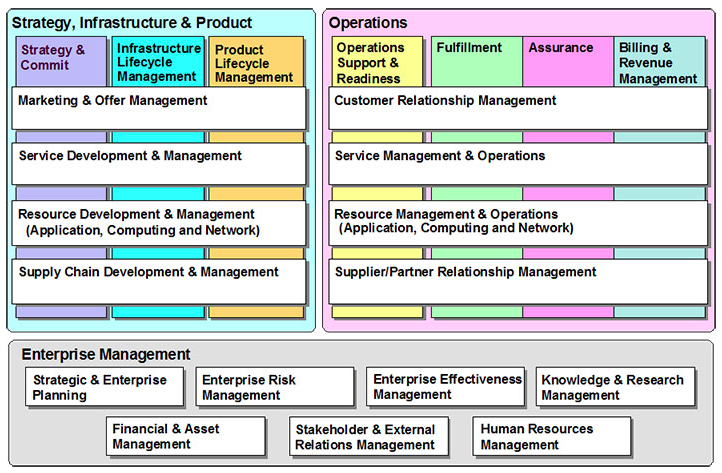
The eTOM is exhaustive and fits MNOs, but a lightweight approach is better for MVNOs with tight margins and fast timelines. The right balance is essential. Too much process and money wastes in bureaucracy. Too little process and customers churn as business processes fall apart. Process management does not need large teams of permanent employees. A lightweight approach is best but regular review and constant oversight with clear process owners is essential.
MVNOs need to follow telecoms industry regulations, laws and standards. Business processes help MVNOs comply by providing a framework for decision-making and operations. MVNOs have to prove that they are in full control of their business.
Virtuser have always worked with larger companies. Our agility gives us an advantage in integrating with ponderous big firms. Our modern, advanced tools allow us to have lightweight processes. Twenty years ago, managing an HSS would have meant editing configuration files on physical servers in a datacentre. Digital transformation gives us a single GUI that can handle all core processes in the cloud. One of our clients recently provisioned 67,000 SIMs by accident. Our main network operations teams were in a different time zone. Rather than wake that team up in the middle of the night, we were able to cancel the SIMs in minutes. Our advanced tooling and deep industry experience means we can adopt lightweight processes. We understand the importance of establishing an organisation level process view.
MVNOs must have a tight grip on processes because agility and service are top priority. Virtuser have the experience and expertise to help you control them with an agile, lightweight approach.


Second Weekly Webinar… one year later :)
For many reasons, including the very sad one at the end of the video, we have taken a whole year to get back to, or get back to close to a weekly webinar! We will get there, and are commited to getting there so be sure to like and subscribe to get the updates and follow the progress to more regular and to live events:

First weekly webinar
We have published the edited version of the first weekly webinar on Youtube: https://youtu.be/DfzjcuA8GyA
which covered:
Latest hero mobile devices, like Samsung S20+ and iPhone 12; why upgrade when fewer people are vs. this time last year: is it about the camera, 5G, other?
How are mobile service offerings, bundles, minutes, megabytes and messages changing with our new situation and lockdowns: is 5G all about the data, or is voice and text still important?
Use your mobile phone with its better camera as a webcam! what are the benefits beyond better resolution?
How Covid is changing our relationship with our mobile devices… is it time to take it to the next level 🙂
Here are some clips in case you don’t have time for the full thing right now:
Some people are buying a 5G device for fear of “missing out” https://youtu.be/g99kNkhkozY
Why upgrade to 5G: https://youtu.be/g99kNkhkozY
Mobile usage has changed with Covid and lockdown: https://youtu.be/NNz0g_VMF5Y
Advantages of working from home on productivity: https://youtu.be/K5GPo6ynR5s

Weekly Webinars start 26th November 2020
We are starting our weekly webinars tomorrow 26th November, the first one will be low key and personal invite only, however from December 2020 they will available to attend in real-time to the first 100, and then available in full and in part on YouTube: https://zoom.us/webinar/register/WN_Pgq27W1US5Okscy4fNHtIg
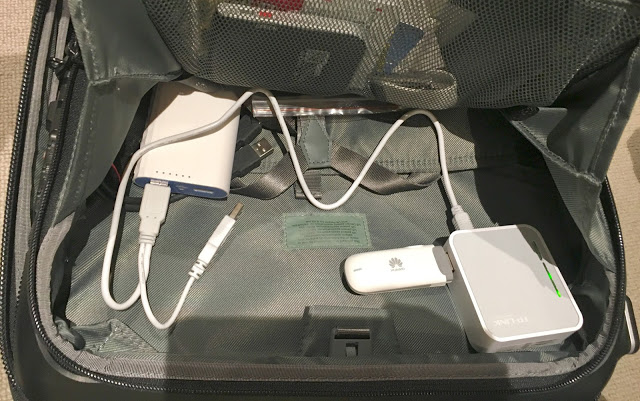
Real World IoT that happened in 2017 and will grow in 2018: Smart Luggage
This is the second in a series of entries on IOT in the real world that impact people’s lives directly, i.e. what is not just a predicability of the future, but things that are going to happen! smart luggage has been a while in the making, with the big brands dabbling for years, however as they have appeared on kickstarter successes already; mainstream will finally dig out their initiatives, dust them down and follow. If they don’t, you know where to spend your money doing it yourself or buying from the likes of G-Ro.

MVNOs need a hard launch date to be successful
Have a Hard Launch Date, as early as an MVP possible and Stick to it – MVNO Gold Rules

Keep it Simple – The seemingly hardest rule in Mobile to follow!
This is the most ignored rule of all and one of the biggest culprit of failed MVNOs, and by that I mean not the launched MVNOs that fail, but moreover the huge amount that never make it to launch due to over complication, which in turn creates delays and cost which moreover lead to uncertainty and uncontrolled risk in the eyes of many – the killer of all things new and venturous!